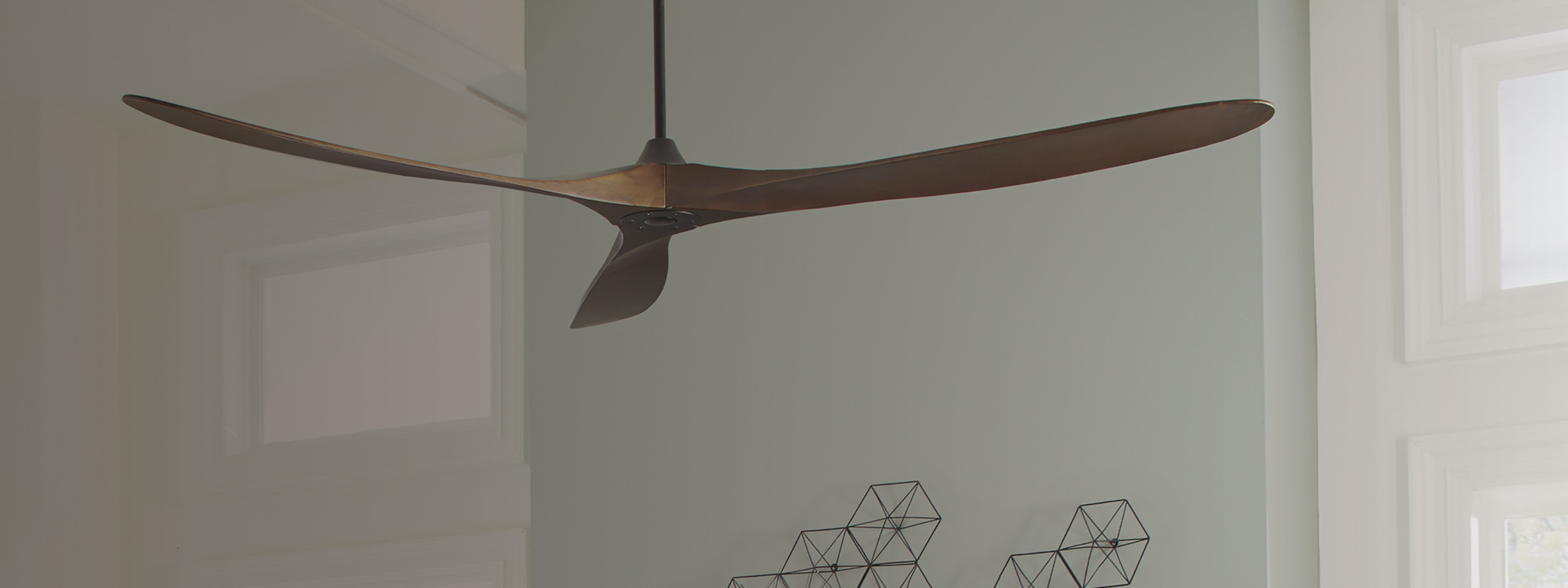
Ceiling fans add a decorative element to a room or porch while adding comfort. Selecting the right style and finishes, in a proportion that fits the space and is sized to move the air comfortably, results in a fan that you'll use every day for years. It's worth it. Here's how.
Use your ceiling fan year-round. Find the small switch located on the motor housing of your ceiling fan.
SUMMER — Blades turn counterclockwise. If you use air-conditioning, a ceiling fan will allow you to raise the thermostat setting 4°F or more with no reduction in comfort. During moderately hot weather ceiling fans may allow you to avoid using your air conditioner altogether. Install a fan in each room that needs to be cooled during hot weather and you may be able to reduce your home's summer energy use as much as 40%.
WINTER — Blades turn clockwise. Your ceiling fan can help create a warming effect in winter and on cool autumn days. When operated in the reverse (clockwise) direction on a low speed, a ceiling fan creates a gentle upward draft, which circulates the hot air that often gets trapped at the ceiling.
| Suggested Fan Size | Application | Room Size |
|---|---|---|
| 29″ Blade Span | Bathrooms, hallways, closets, pantries | Up to 50 sq. ft. |
| 36″ Blade Span | Breakfast nooks, laundry rooms | Up to 75 sq. ft. |
| 42″ Blade Span | Small bedrooms, small kitchens | Up to 100 sq. ft. |
| 50″ or 52″ Blade Span | Standard bedrooms, family rooms | Up to 400 sq. ft. |
| 54″ or Larger Blade Span | Great rooms, large areas | Over 400 sq. ft. |
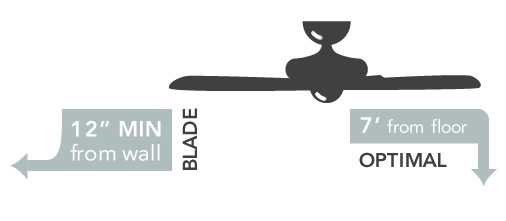
Standard Eight-Foot Ceilings
Not all ceilings are eight feet high, but you can still enjoy a ceiling fan. Look for fans that ride close to the ceiling in order to keep them seven feet from the floor.
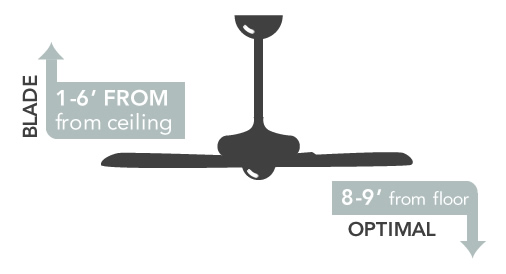
Ceilings Above Eight Feet
Great rooms and soaring ceilings are perfect for ceiling fans. For these installations your fan should be hung by a down rod to eight or nine feet from the floor.
Fan-to-floor height is important because the higher the fan is hung, the less air circulates near the floor. Choose an accessory down rod available in lengths of one foot to six feet to achieve your desired height.
Cathedral and sloped ceilings work well with ceiling fans. Select a fan with the right mounting kit for sloped ceilings up to 40°. Mount your fan as close as eight inches from the ceiling.
A ceiling fan is a motorized appliance. It should look good, but perhaps even more importantly run absolutely quietly, be perfectly balanced, and have enough motor capacity and blade pitch to actually move some air. So we need to get a little technical now and provide some tips to help you.
SUMMER During warm summer months, fans do not actually lower the temperature in a room. Instead, they create a wind-chill effect that lowers the perceived temperature. This may allow you to raise your air conditioner setting from 72°F to 76°F or even 78°F while maintaining comfort, resulting in significant energy savings.
WINTER During the winter, run the fan at a low speed in the opposite direction (clockwise). This pushes the warm air trapped near the ceiling toward the perimeter walls and back down into the room. As a result, the warmest air is recirculated into the living space, reducing the workload on your heating system and helping lower heating costs.
Don't forget to flip the switch when the seasons change.